Thomas Baird
On Thursday, December 3, 1970, 16-year-old Janice Phillips was walking home alone. She left the popular Boardman Rollercade, where she spent the evening skating with friends, around 10 p.m. She turned the corner away from the rink, heading down a mostly industrial stretch of Lake Park Road, bracing against the 18-degree chill.
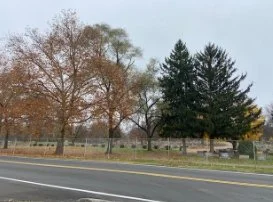
On one side, there were large factories and plants, closed for the night. On the other, she passed the sprawling Lake Park Cemetery.
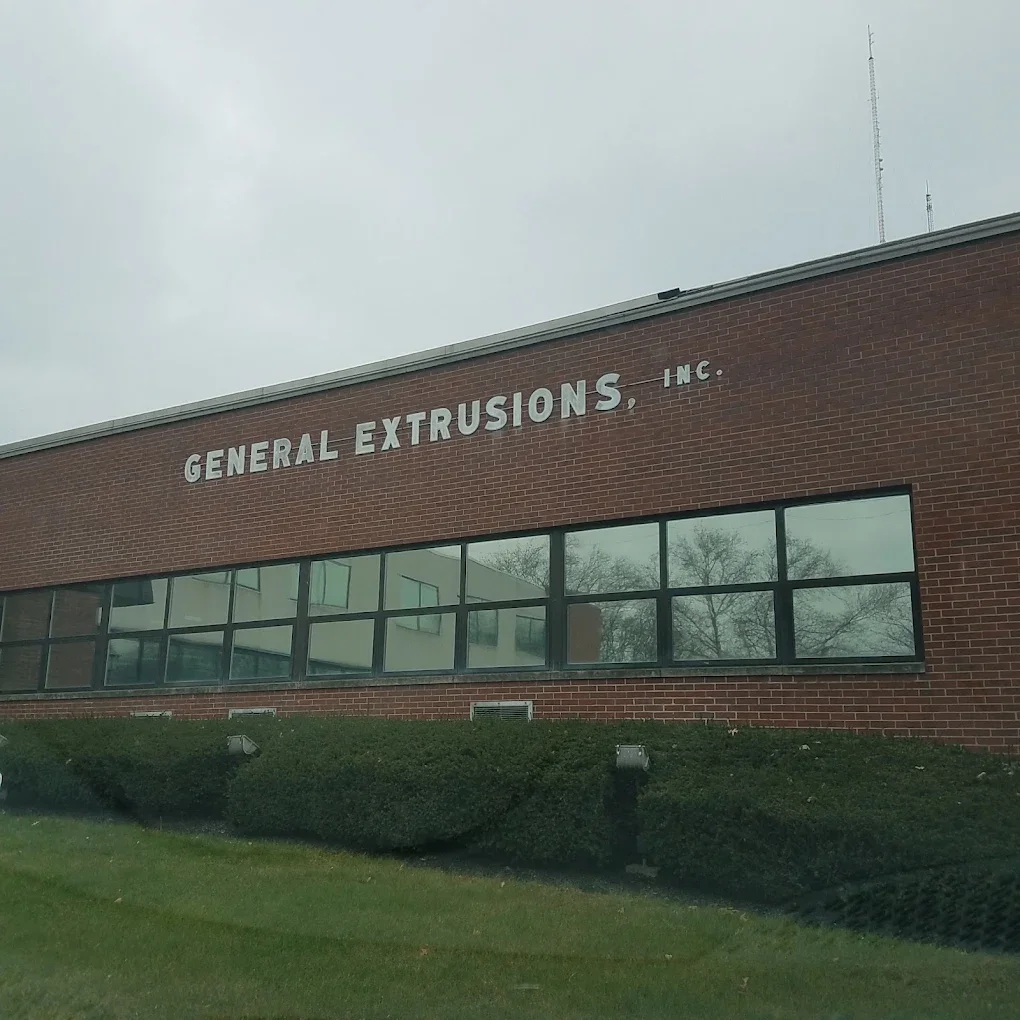
After a few minutes, she approached the General Extrusions complex, with its red brick and sheet-metal buildings looming ahead. And that’s when something caught her eye, in the manufacturer’s parking lot.
Moving closer, she saw a young man sitting upright on the frozen ground, badly beaten, unconscious, with no clothes on from the waist down.
Janice raced back to the Rollercade for help. She returned with two of her friends, and the young man was still there, unable to speak. Although they all personally knew the victim, they didn't realize it, at first, as his face had been beaten beyond recognition. Someone called the police.
When the first patrolman arrived, he too knew the boy, but like the others, was initially unable to identify him by sight.
The boy was still alive, though barely. Slumped over, he slipped in and out of consciousness.
Paramedics rushed him to South Side Hospital, in nearby Youngstown. Almost immediately, there were complications. Doctors quickly determined he had skull fractures and fractures to his nose and face. A tracheotomy was performed, and he developed a fever. In serious condition, he was admitted to the intensive care unit.
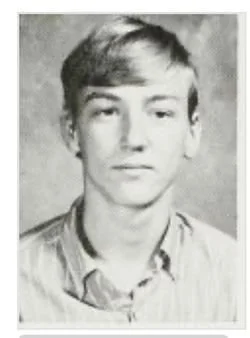
The victim was 15-year-old Thomas Baird, a freshman at Boardman High School. And for the next 10 days, he fought for his life.
But in the end, his injuries were too severe for his young body to overcome.
He had a large family, and in the wake of his death, they were left to ask the questions that haunted them: who could have wanted to harm their handsome, well-liked boy, and why? By all accounts, classmates said Thomas was “a good guy,” someone with no enemies.
The small Boardman Police Department, tasked with answering these questions, quickly launched an investigation.
Timeline
Police began by creating a timeline and retracing Thomas’ steps that night. They wanted to determine how the teenager could have ended up alone, outside, in that desolate lot on a freezing school night.
A friend reported seeing Thomas leave his house, at 825 Afton Avenue, around 8 p.m., according to The Vindicator. He walked east toward South Avenue.
Not yet old enough to drive, it seemed Thomas decided to make the roughly 1 ½-mile walk to the Rollercade, at 965 East Midlothian Blvd. Today, the site is occupied by the former Schwebel’s Bakery building.
The Rollercade was a popular, inexpensive hangout for junior high and high school students at the time. Founded by brothers Jim and Frank “Bud” Kolasky, it remained in the Kalasky family for more than 30 years. For just a few dollars, kids could rent skates, grab a snack, and play games, according to the local history blog Bob on Books.
There’s a Facebook page dedicated to the old Rollercade, which closed in the 1980’s, when its owners could no longer afford the liability insurance. The page has more than 1,000 members who organize reunions and reminiscence about their time there. They share old photos and memories of the records that often played, like, “Unchained Melody,” during the reverse all-skate, and the “Hokey Pokey.”
They also compare notes on what they call “initiations,” a rite of passage that took place on rowdier Friday and Saturday nights. Kids might be dumped head first into a garbage can or hung upside down by their skates in the check room.
And when the rink hosted regular teen nights, fights were known to break out, particularly when students from different high schools came together. As one former skater recalled, tensions could flare when boys from different schools were competing for the attention of the same girls.
Police quickly learned that on the night Thomas was attacked, he had been involved in an altercation with other teenagers. What sparked the fight has never been made public, but reports consistently describe it as a minor incident. Witnesses who saw the fight gave police the names of those involved, though those names have never been publicly released.
Now, investigators had their first lead.
News reports don’t say what time Thomas left the Rollercade. But at some point, he appears to have started the walk home alone.
By 10:00 pm, Janice Phillips would make her startling discovery.
Evidence & Theories
Thomas’s condition remained poor throughout his time in the hospital. But about a week after he was admitted, he briefly regained consciousness. He was alert, but unable to speak.
Detectives seized on this window to ask Thomas a crucial question: Did he know who had assaulted him?
Thomas nodded, yes.
Police interpreted his response as support for their working theory - that Thomas had been beaten on his walk home by the same group of teenagers he’d argued with earlier that night at the Rollercade.
But other interpretations can be considered as well.
A nod could mean that yes, Thomas personally knew whoever attacked him. Or, it could mean that yes, he had seen his attacker and could identify the person if given the chance.
If not the group from the skating rink, but someone else he would recognize, he might still nod yes in response to police.
We may never know exactly what Thomas meant. Not long after that brief moment of awareness, he slipped back into unconsciousness.
A few days later, on December 13, 1970, at 7:30 p.m., Thomas was gone.
What we do know is that the attack on Thomas was brutal. Vicious.
Dr. William R. Johnson, the deputy coroner of Mahoning County, performed the autopsy. In addition to multiple skull fractures and a cerebral contusion, Thomas suffered a severe brain injury, bronchial pneumonia, and meningitis.
The coroner’s report doesn’t specify what might have caused his injuries. There is no mention of a possible weapon, or whether more than one person could have been involved.
But there may be a clue buried in other reports and case files. One that could point not only to a possible weapon, but to the person who might have wielded it.
Shortly after Thomas’ death, Boardman Police Captain William F. Shaffer told The Vindicator that despite the extensive trauma, Thomas’s face had not been cut. That detail, Shaffer said, suggested that “gloved hands” may have been used to inflict the injuries.
It was an unusually specific possibility to raise publicly, especially so early in the investigation.
Police records from another local case may explain where that idea came from. And, more importantly, who it might have pointed to.
In an interview, filed in police reports from a 1972 case, with a witness only identified by his last name, Burkert, he told investigators that a security guard named Ken LeClair worked at the Boardman Rollercade in 1970, the same year Thomas was killed. According to Burkert, LeClair carried a pair of weighted-knuckle gloves, also known as sap gloves.
Weighted-knuckle gloves contain lead or steel around the knuckles, which increases the force of a punch, while also protecting the wearer's hands.
As Shaffer stated, such gloves could have caused the devastating injuries Thomas sustained, while leaving no visible cuts behind.
LeClair had a long record of assaults on teenage boys in the area and would become a suspect in other Boardman cases. But if police ever considered him a suspect in Thomas’s case, publicly, they continued to state their belief that Thomas was most likely attacked by the teenagers he’d argued with inside the Rollercade.
But another detail stands out as inconsistent with a teenage fight that went too far. Thomas was found without his pants and underwear.
The autopsy report doesn’t list any clothing or personal items recovered at the scene. Whether his pants and underwear were found nearby and collected by police, or taken by whoever attacked Thomas, remains unclear. Why his pants and underwear were removed is also unknown.
Sadly, Janice Phillips, the teenager who discovered Thomas that night, passed away in 2017. There are no public reports with her statements regarding the missing clothing. Her son, Dan Burnham, replied in a Facebook message that he never heard the details of what his mother saw that night. He only knew that the experience deeply traumatized her.
Furthermore, if the police theory is correct and about the teenage fight, then why hasn’t this case been solved in more than 55 years? Police know the identities of the teenagers involved in the altercation at the Rollercade. And yet no arrests have ever been made.
As far as physical evidence, while Thomas was killed decades before DNA testing became available, investigators could have collected fingerprints, blood, hair, fibers, or clothing. It’s unclear from the available records whether any such evidence was recovered, tested, or preserved to potentially still be tested today.
No Answers, No Justice
Thomas’s parents, James and Rosemary, and his six siblings, brothers James, David, and Mark, and sisters Virginia, Michelle, and Lynn, were left with no answers and no justice. They held his funeral at St. Luke’s Catholic Church, just up the street from their home.
Born August 16, 1955, Thomas had his whole life ahead of him. He would never get his driver’s license or graduate from high school. His family would never see him get married or have children of his own.
And as the months passed with no arrests, the family and the community were left to wonder, if this wasn’t simply a fight among teenagers that turned deadly, then what was it? Who else might have had the motive, means, and opportunity to attack Thomas, and the capacity for that kind of violence?
The investigation seemed to stall.
Then, the unthinkable happened. Sixteen months later. And just two miles away.
How You Can Help
If you have any information, no matter how small, you may help provide long-awaited answers and justice for Thomas Baird. Please call the Boardman Police Department at (330)726-4144.
Disclaimer: Submitting information to our organization does not constitute a tip to law enforcement. We do not accept submissions or anonymous submissions, and we cannot guarantee that information provided to us will be acted upon. Our role is to help raise awareness and direct potential leads to the proper investigative channels.